With every exhibition season comes a new Alcove Artist in the Museum Store—an emergent artist from the Pacific Northwest whose work inspires our visitors while thematically complementing the shows in the galleries. This winter, for the very first time, the Frye Art Museum Store is excited to spotlight not one but two incredible local artists: Saiyare Refaei and Yoshi Nakagawa from Tacoma, Washington. Read on for more about their remarkable collaborative linocut print Sound, now on view.
by Caitlyn Edson
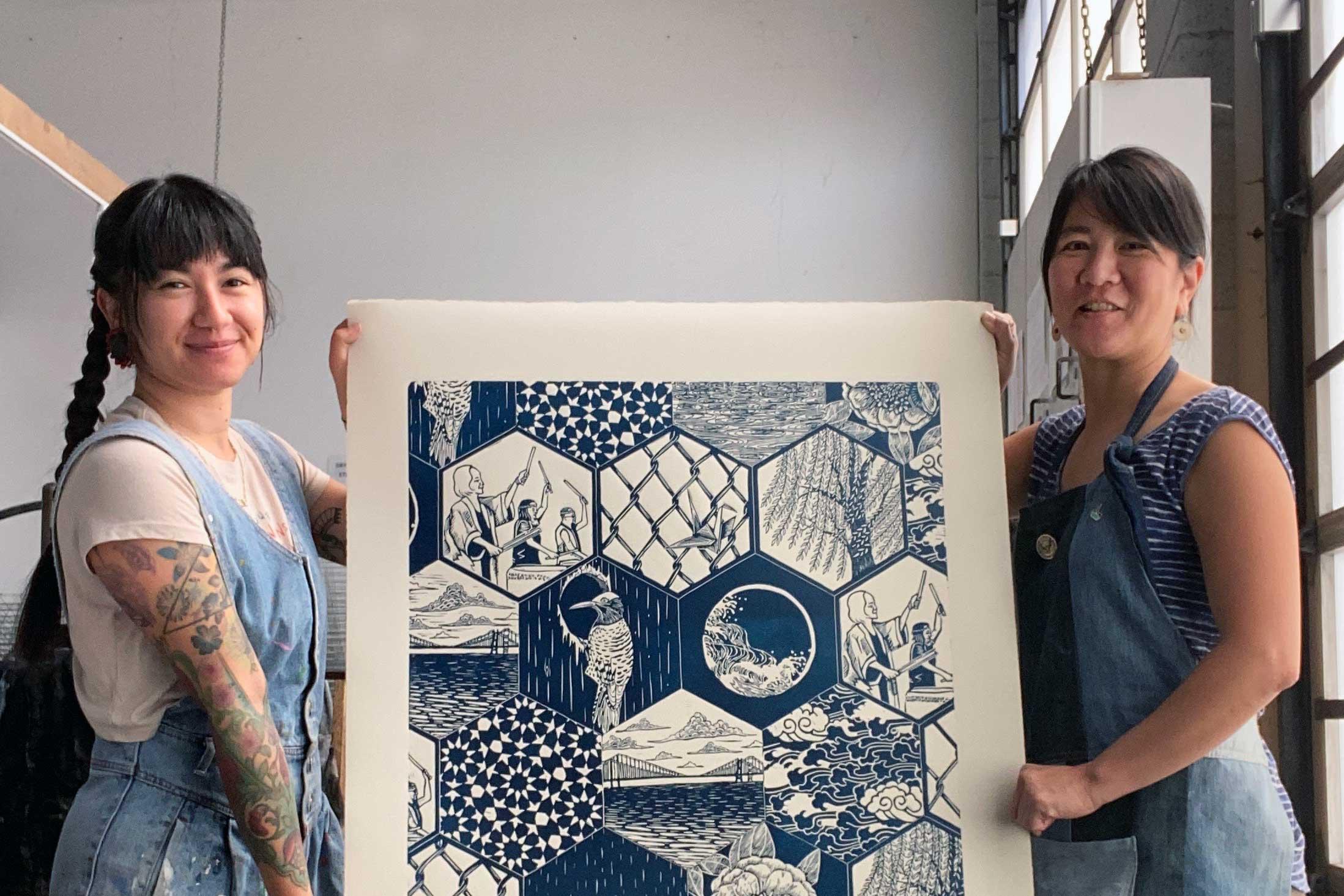
Sound is a large-format linocut collaboration by artists Saiyare Refaei (they, she) and Yoshi Nakagawa (she, her). In spring 2025, Saiyare and Yoshi created Sound for the annual Tacoma Wayzgoose Print Festival.
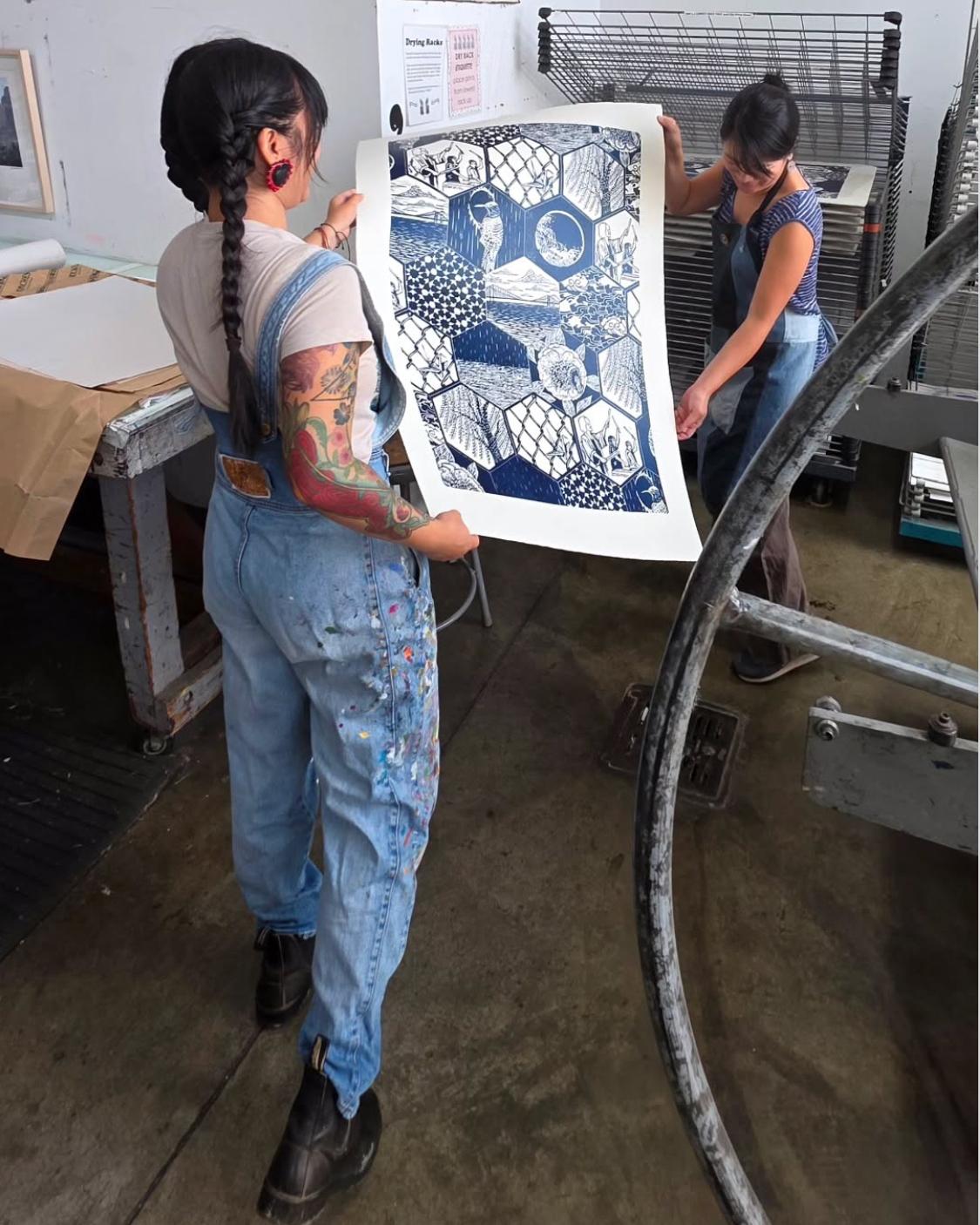
Ahead of the event, Saiyare and Yoshi prepared a 2 x 3 ft. linoleum block featuring an intricate design that draws inspiration from quilting patterns and includes elements of the artists’ Chinese, Iranian, and Japanese heritages. A highlight of the festival weekend is the spectacle of steamroller printing, in which their large-scale linoleum block is printed onto paper with heavy machinery not often associated with printmaking.
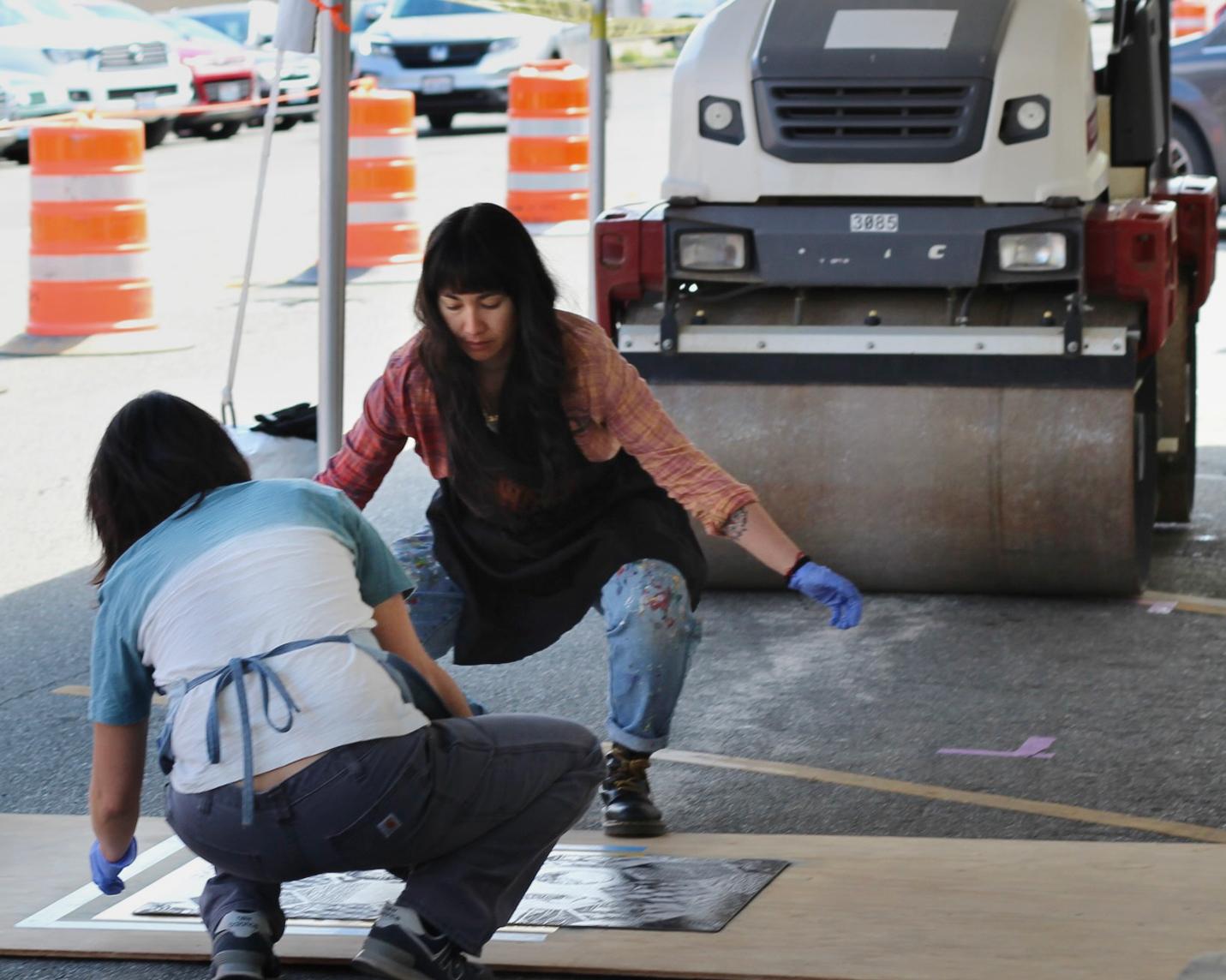
Linocut is a relief printmaking technique that is typically characterized by clearly outlined areas of color. Saiyare learned to carve woodblock in Oaxaca, Mexico, from a friend in his family’s skate shop. “My Mexican printmaker friends often describe printmaking as ‘sacando las luces,’ meaning to carve out the light,” they explain. “The process of designing and carving out any type of block, in this case linoleum, you are forced to think differently, backwards, and in a way that is outside of the norm. It’s a very rewarding process that always keeps me learning, surprised, and delighted.”
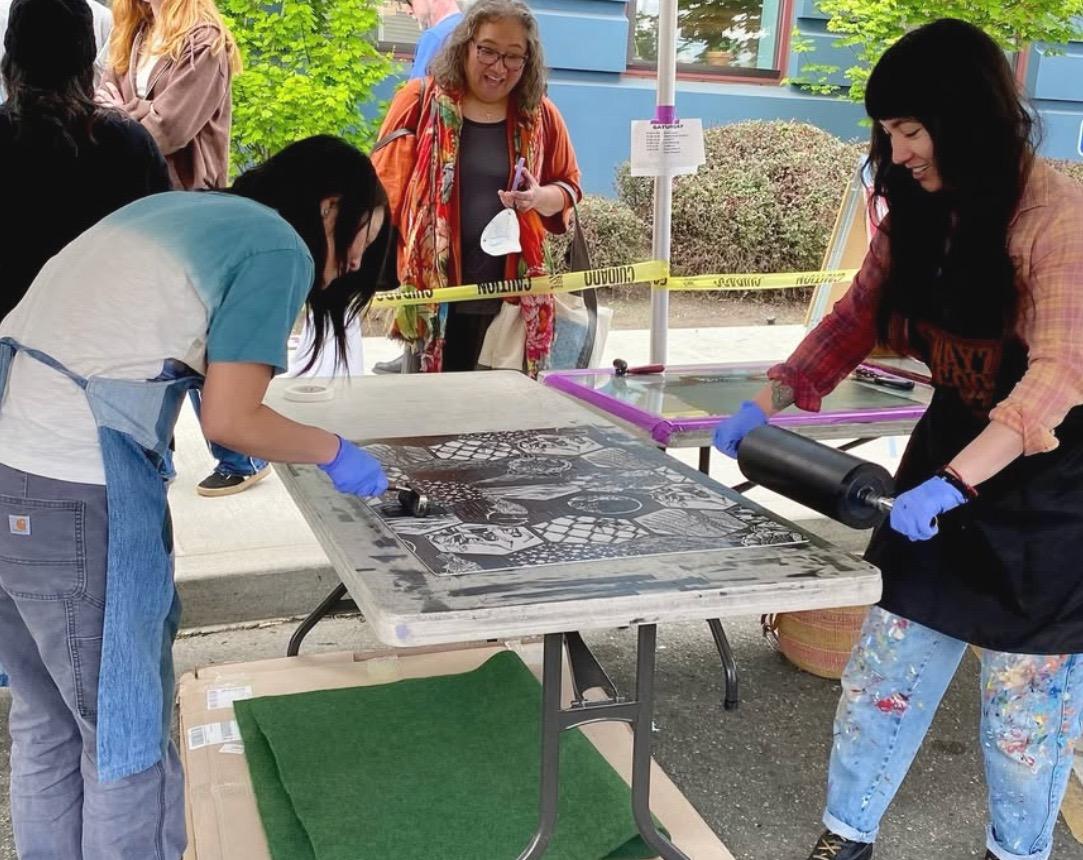
The theme of the 2025 Wayzgoose Festival was “Make Some Noise!” which sparked the concept behind Sound and its depictions of local vignettes. As part of their process, the artists chose ten images and then got to work conceptualizing a way to arrange them cohesively. Yoshi describes this process as “natural, easy, and smooth.” Saiyare echoes this adding, “it was a joy to problem solve with Yoshi around how we could most evenly divide up the work to make a cohesive piece.”
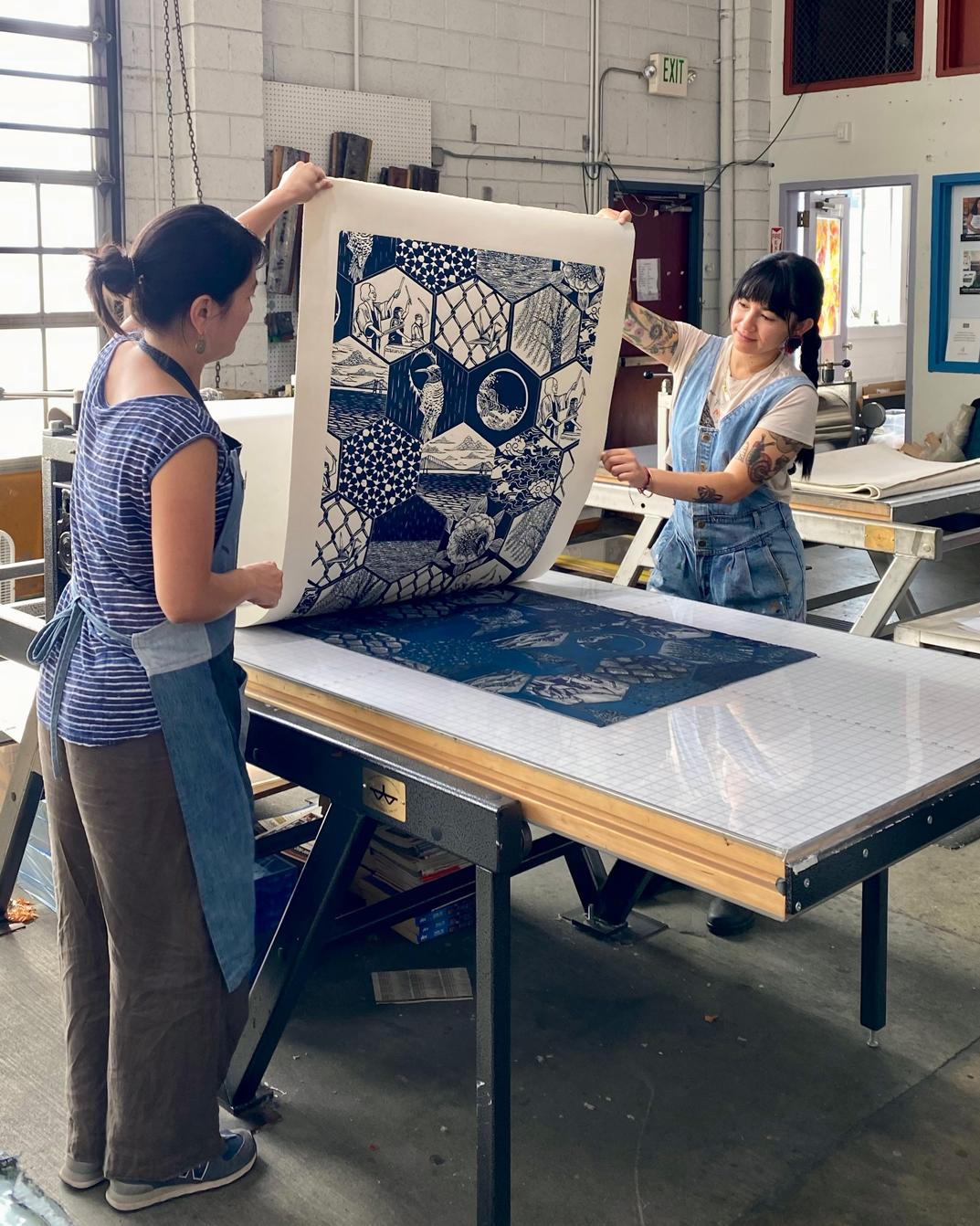
Part of their problem solving involved geometry. In creating Sound, Yoshi recalls having to do a lot of math to figure out the placement of the light and dark hexagons. “The geometry allowed us to divide and assign the hexagon images equally,” she says. From there, each artist worked on their own designs and carvings before reconnecting at Wayzgoose to bring Sound to life. “After agreeing on our sketches, we transferred our drawings on tracing paper and then onto the linoleum at our second meeting,” explains Yoshi. “We each had a month to carve out our five images. And we printed the linocut together with a steamroller and etching press.”
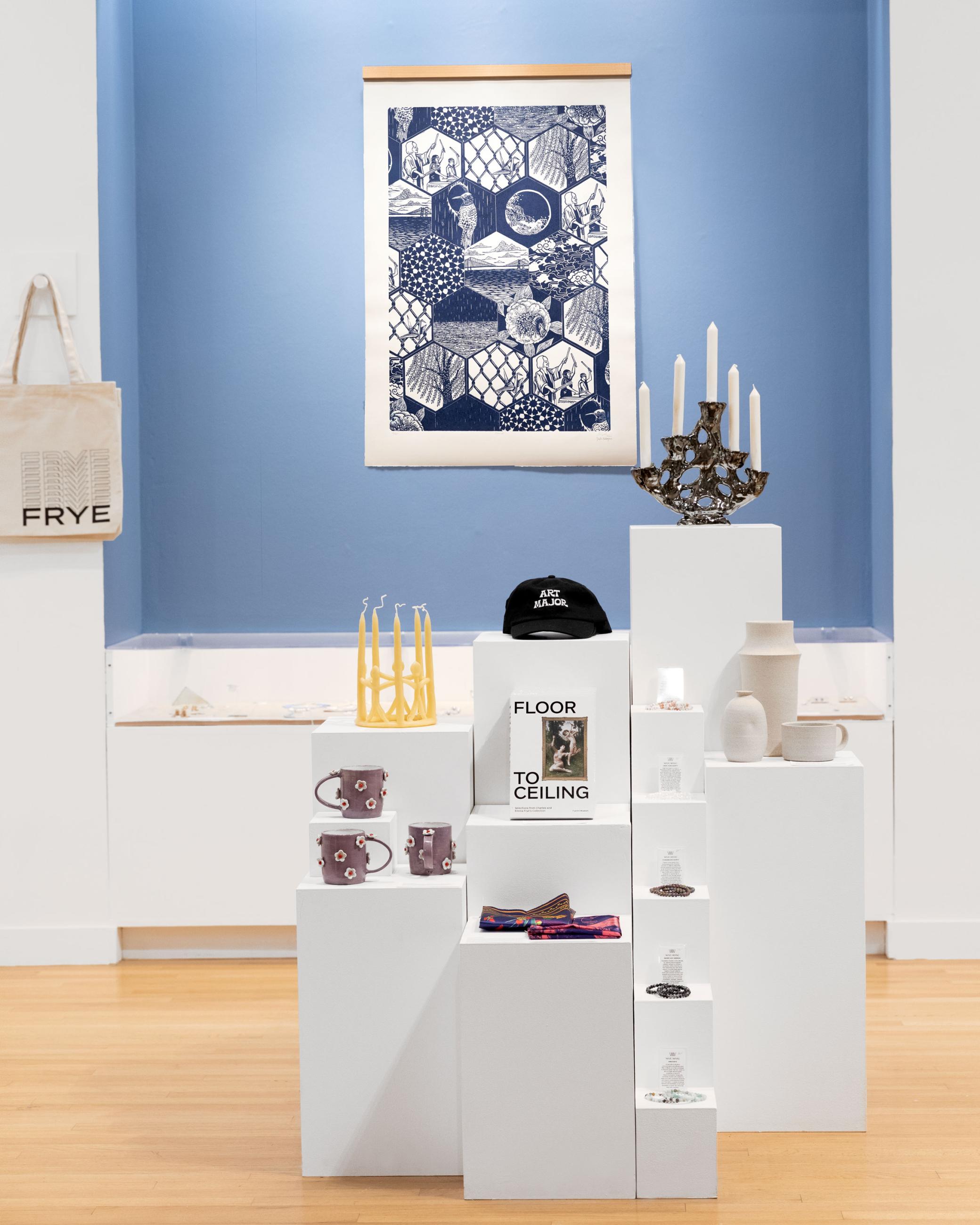
Following the festival, the collaborators came together again to reproduce Sound in a studio environment. Last summer, Saiyare and Yoshi presented a demonstration at Pratt Fine Arts Center in Seattle, printing a limited edition of Sound on Pratt’s large Takach etching press. The result is a stunning composition created with dark blue oil-based ink in which Saiyare and Yoshi’s illustrations are in seamless conversation with one another. “Our audience [at both Wayzgoose and Pratt] commented on how cohesive the images are, in that it’s hard to tell who carved or drew what,” reflects Yoshi.
Each artist’s drawings for Sound hold deeply personal symbolism. Saiyare conceptualized the taiko drummers, Tsuru (paper crane) on the chain link fence, bees pollinating, and “loud” patterns of Chinese and Iranian Motifs. “Through this process it came to mind that patterns too make noise,” says Saiyare of the latter. “Incorporating Chinese wind motifs and geometric patterns often found in Islamic art or mosques speak to the movement of our people across borders, and the smart and beautiful complexity of our diasporas.”
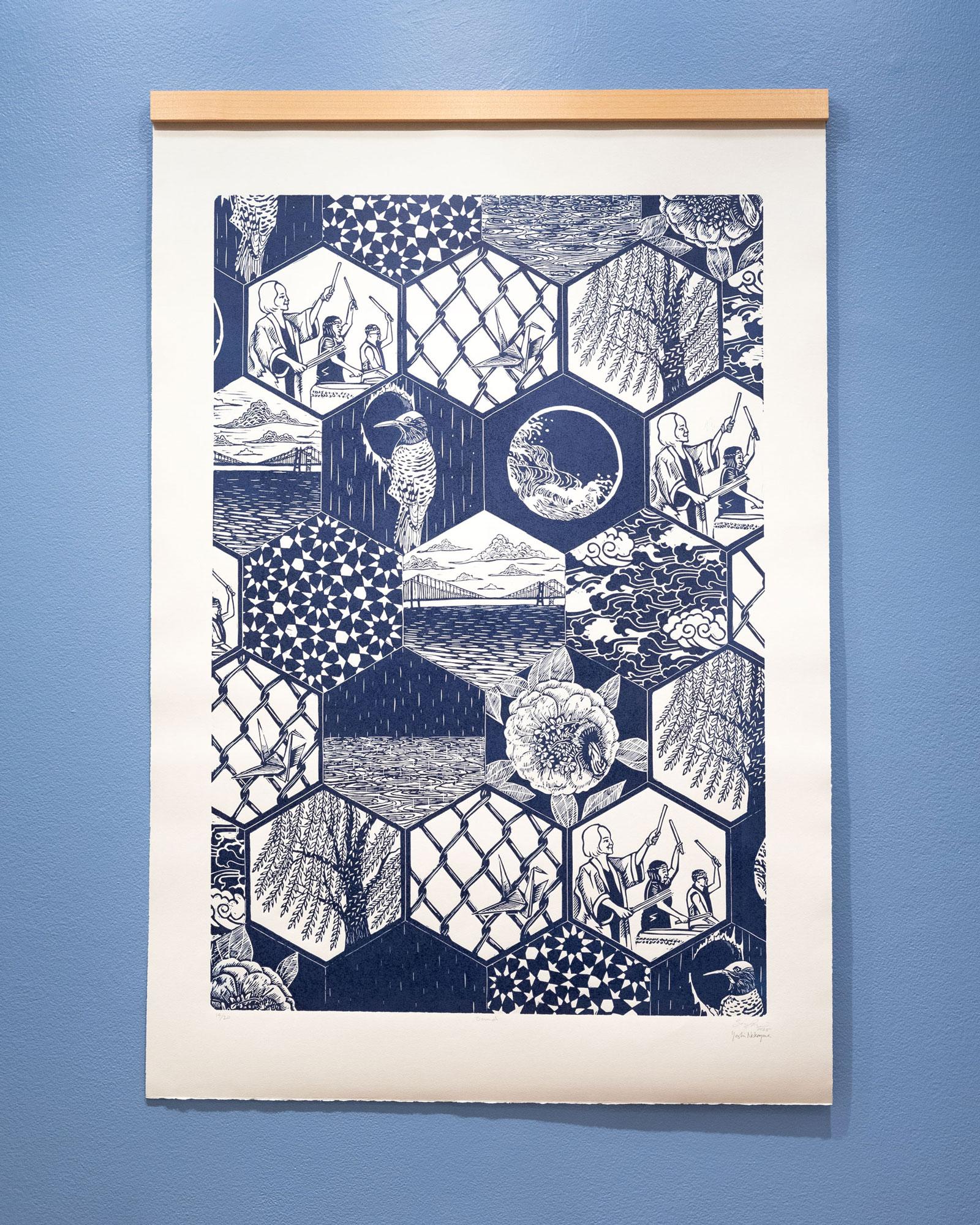
The image of the Tsuru embodies one of the most powerful details in Sound and is thematically connected to the depiction of the taiko drummers. Saiyare explains, “the Tsuru is a Japanese cultural symbol for transformation, healing, and nonviolence. Tsuru for Solidarity has received tens of thousands of paper cranes from all over the world to hang outside of detention centers and prisons all over the United States. For this specific print, I wanted the Tsuru to look as though they were flying freely through the fence and away from the detention center.”
Yoshi’s selections speak to her ongoing art practice and interest in the natural world and Japanese textiles. “I chose images seen in my past work,” she explains, of the hexagons depicting wind blowing through a willow, the sound of a foghorn coming from the Tacoma Narrows bridge, a Northern Flicker pecking a tree, the movement of water stylized like a Japanese woodcut, and gentle raindrops pitter-pattering on the Puget Sound.
Although their points of view are distinctive, Saiyare and Yoshi have followed a similar artistic journey. They are both originally from Oregon, both studied at universities in Tacoma, WA, and they met at El Taller Ruffino Tamayo in Oaxaca, Mexico while taking printmaking classes from Maestro Oswaldo Ramírez. Yoshi says that she and Saiyare “share a common love for nature, gardening, and land stewardship,” as well as aligned values that would enrich their collaboration and inform themes represented in Sound. “We wanted to reflect that in our piece,” explains Yoshi, “along with expressing our heritage and identity.”
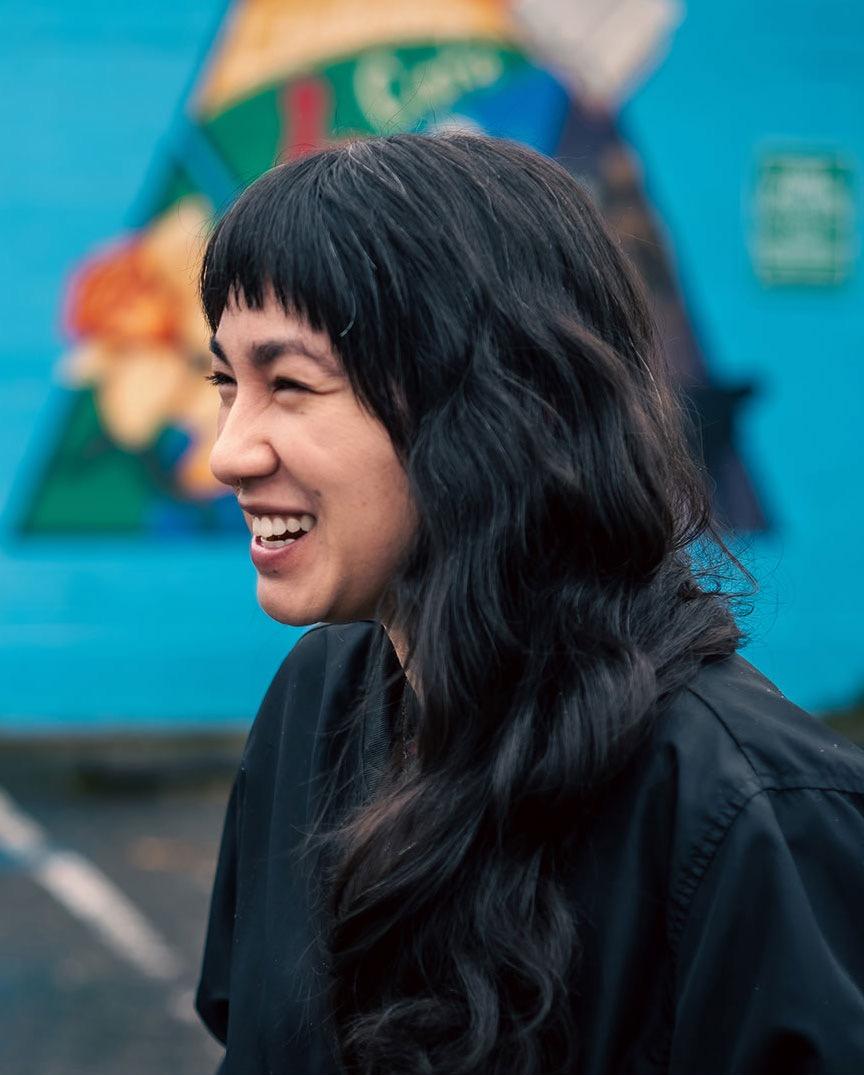
Outside of this collaboration, Saiyare and Yoshi have dedicated art practices that extend widely beyond their Tacoma home base. Saiyare’s mediums include community murals, printmaking, and meticulous pointillism drawings. “This year I am illustrating a children’s book written by Tala Khanmalek to be published with Blue Cactus Press. Currently, I am collaborating with Chardé Brown and Allina Hakim to design the Northwest Folklife Festival poster,” says Saiyare about some of their recent work.
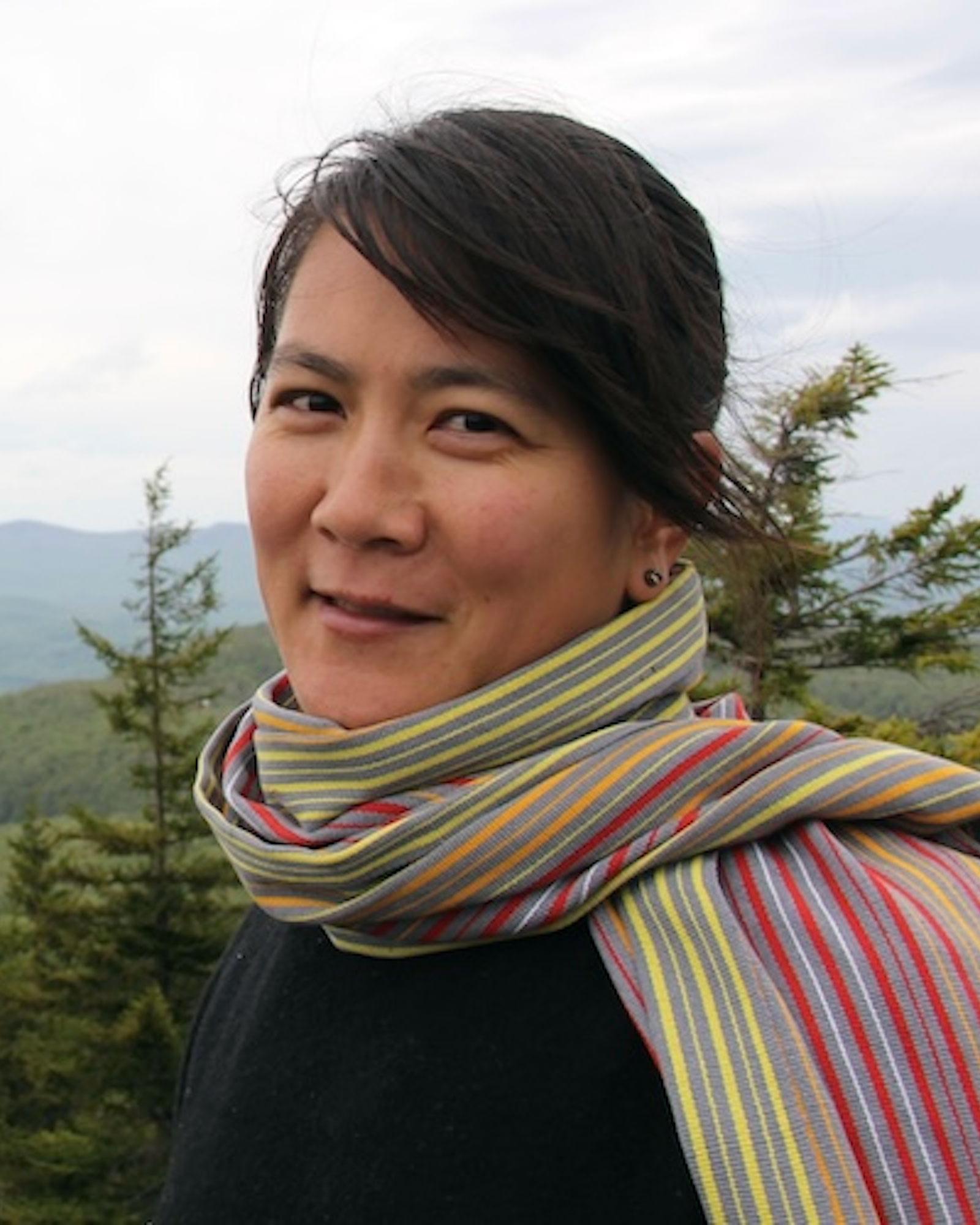
Yoshi has specialized in printmaking since 1999 and has shown and taught workshops regionally and internationally. Her practice is informed by her experiences living in Oaxaca, Japan, and the Pacific Northwest. “I’m grateful to have continual work as a full-time visual artist teaching workshops and selling at events and galleries,” she says. “Some other projects this year are procuring funds to self-publish my second volume art book, and individual shows at the Auburn Community Center Gallery in July–September, and the Seattle Japanese Garden in September–November.”
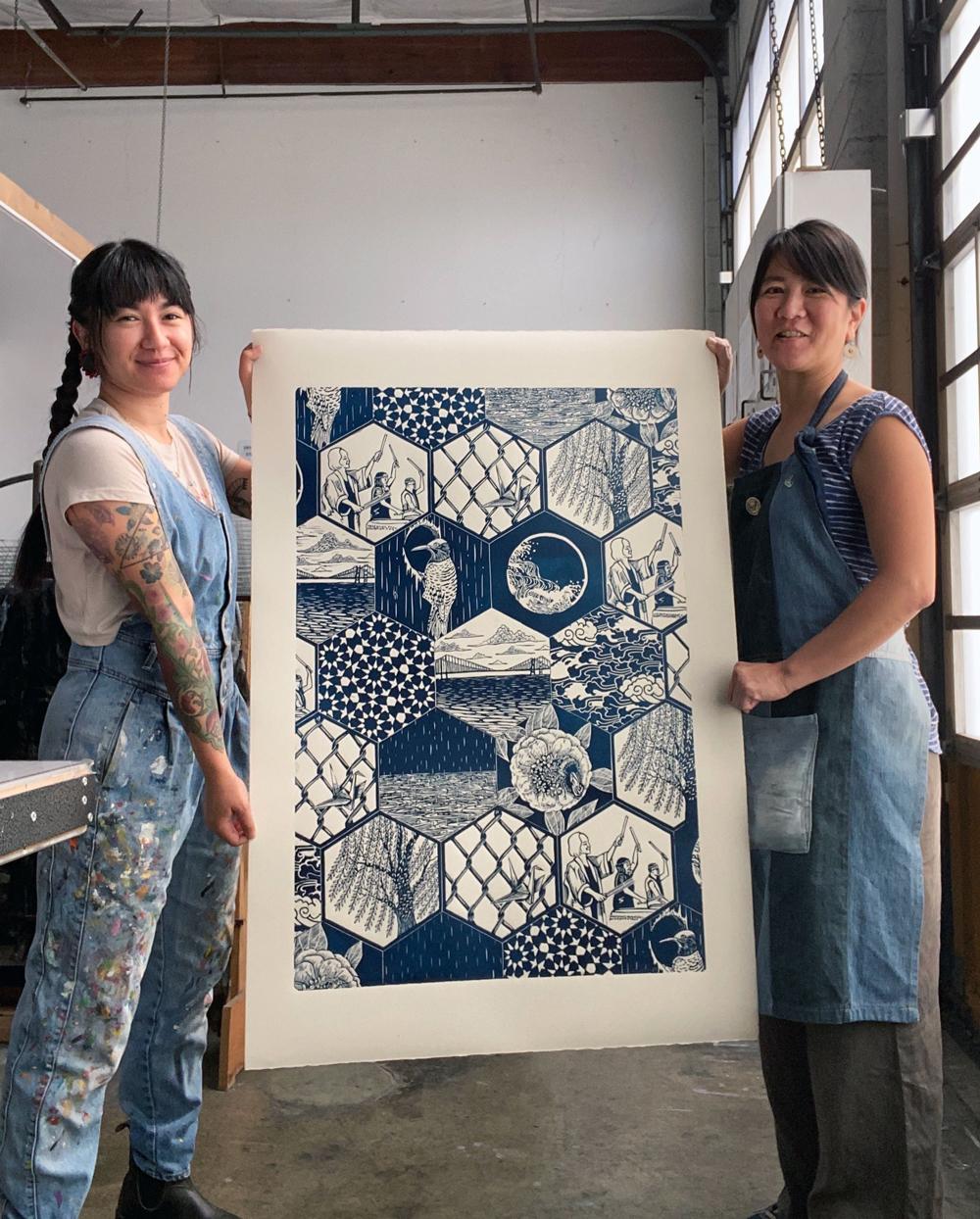
The Frye Art Museum Store team is honored to feature Saiyare Refaei and Yoshi Nakagawa’s powerful work Sound in tandem with Wallflowers this season at the museum. Follow us on social media for more glimpses at Saiyare and Yoshi’s work and practice and be sure to visit the Store to view Sound, through the end of May.